
Prof. Ravipati Raghavarao Memorial Lecture
In memory of Prof. Ravipati Raghavarao, his family has instituted a Memorial lecture to be administered by PRL.
A) The first Memorial lecture for the year 2024-25 was held in PRL on 21 February 2025, for the brilliant young scientist category.
B) This year (2025-2026) nominations are invited for the category of Eminent Senior Scientist (>45 years) from India working in any of the research fields being pursued in PRL Currently (https://www.prl.res.in).
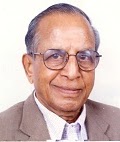
About Prof. Ravipati Raghavarao
Prof. Ravipati Raghavarao (fondly known as RRR) was an illustrious faculty member of PRL and served in PRL from 1966 to 1989. Prof. R. Raghavarao was one of the pioneers in the field of Aeronomy, covering all theoretical and experimental aspects of upper atmospheric investigations, whether it is ground-based radio and optical probing measurements or satellite-based experiments like topside sounders or rocket-based experiments like vapour releases and situ measurements.
Prof. Raghavarao was born in a large family of farmers in Ongole – a coastal town in Andhra Pradesh. He obtained his B.Sc, M.Sc and DSc (1960) degrees from Andhra University, Visakhapatnam with Prof. B. Ramachandra Rao as his thesis supervisor in the field of Ionosphere. As a young and aspiring post-doc ready to take challenges, he went (1963-64) to the National Research Council, Ottawa, Canada, to work on a project related to the 9.3 cm radio survey of the Galactic plane, making significant contributions. He soon returned to the field of Ionospheric Physics, the topic that he loved most throughout his life, and worked (1965-66) at the Department of Geophysical Sciences, University of Illinois, Chicago, USA. He returned to India in 1966 and soon was invited to join PRL by Prof. Vikram Sarabhai.
He was one of the scientists who established the top-side ionospheric sounding station in PRL during the late '60s. Using this facility, he and his students soon discovered and characterized the so-called top-side ionospheric "ledge".
He and his colleagues conducted several successful campaigns of Upper Atmospheric wind measurements from Thumba Equatorial Rocket Launching Station (TERLS) by photographic tracking and triangulation of rocket released vapour clouds. Later on, this was followed by the development of an optical technique for daytime optical measurements. He also initiated and sustained electric field measurements in the ionosphere by barium vapour releases.
From the wind data, Prof. Raghavarao and colleagues showed that the vertical wind is significant at the magnetic equator (Thumba), sowing the seed of his hunch that such winds could be the cause of the counter-electrojet phenomenon, a phenomenon wherein the ionospheric current reverses its direction at the E region altitudes. This led to the development of a theoretical model for equatorial electrojet that included the wind effects and proved that vertical winds are indeed a viable and effective mechanism to cause the equatorial counter-electrojet current.
Further, he and his co-workers developed theoretical models for explaining the conditions that are critical to understand the effects of seed perturbations and the evolution of the equatorial Spread-F phenomenon that deals with the ionospheric plasma bubbles.
After his superannuation in 1989, he went to GSFC, NASA (1990-92) to work on Dynamic Explorer data and provided clinching evidence for the equatorial temperature and wind anomalies which, till that time, remained as only one of his hunches. This was the first result on such anomalies.
He gave a new dimension and impetus to the Optical Aeronomy Program in PRL that led to the innovation of the Dayglow measurement technique and to build state of the art High-resolution Imaging and Scanning spectrometers. Many of the experimental confirmations for his early theoretical predictions have come out to be true after decades.
All through his research life, he always developed ideas first and then went about looking into data or proposing experiments to prove or disprove those. He never believed in serendipity, nor did he want to thrive on it. He was a selfless person with a farsighted vision, a passion for science and an indomitable spirit of pursuance. He clearly recognized talent wherever he found it and gave wholehearted encouragement for the growth of such talent. He had played a major role through his advisory capacity in shaping the space science programme in the country. He was a true beacon to the Aeronomy scientific community much sought after by the following generations. Most of all, he was a fine human being.
He was an elected Fellow of the Indian National Science Academy (INSA) and a recipient of the Kalapathi Kalpathi Ramakrishna Ramanathan Medal of INSA (1996).
He was interested in all the areas of sciences being pursued in PRL, was a regular attendee in all the seminars and colloquia held in PRL of all areas and actively interacted with all the faculty of PRL cutting across the research domains.
Guidelines for Nominations:
| Eligibility | 1. Eminent senior scientist: > 45 years Prof. R Raghava Rao Memorial Lecture shall be given in recognition of notable contributions made by the scientists working in India in any of the scientific areas of research being pursued at PRL. |
| Nominations and Last Date: |
|
| Search-cum-Selection Committee | Nominations received in time and found to be in order will be considered for evaluation by a committee constituted by the Director, PRL, for the yearly Prof. R Raghavarao Memorial Lecture. |
| Announcement | The name of the selected scientist shall be announced by the second week of February 2026 for the 2025-26 lecture. |
Other Information:
| About the Memorial Lecture | The Lecture will be delivered on 18 February 2026 during a ceremony in which the recipient will deliver a lecture at PRL (in person). The summary (to be provided by the selected scientist) of the Lecture will be included in Newsletters (Hindi and English) and social media platforms. Each memorial Lecture recipient will be presented with a plaque and a citation. A round-trip airfare to Ahmedabad for economy class and local hospitality in Ahmedabad will be covered. |
| Nomination Proforma | Click Here |
| Contact | [email protected] 079 - 2631 4652/4869 |