prl logo
भौतिक अनुसंधान प्रयोगशाला
Physical Research Laboratory
 
Search
Please Select Month
Please Select Year
Lecture Category
Please Enter Full or Partial Name of Speaker

PRL-IAPT Dr. Vikram Sarabhai Lecture

The mood of a star and space weather

Date
2026-03-11
Speaker

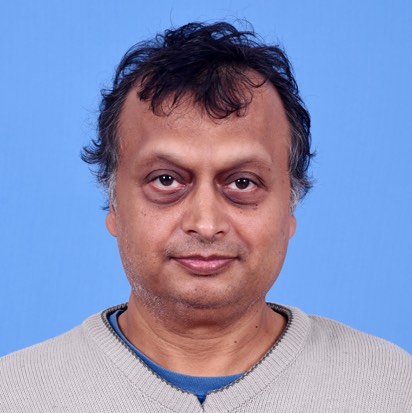
Prof. Dibyendu Chakrabarty
Venue
K R Ramanathan Auditorium, PRL main Campus, Ahmedabad

Abstract

As a species living on a planet, we are literally immersed in the atmosphere of our star, the Sun. The Sun is a magnetized star, and charged particles continuously stream out of it. This stream of particles is known as the solar wind. Solar wind carries the magnetic field from the Sun into the heliosphere –a huge region of space carved out from the interstellar medium by the Sun and its magnetic field. The solar magnetic field in the interplanetary medium is known as the interplanetary magnetic field (IMF). The heliosphere is filled with the solar wind, energetic particles (some of which have extragalactic origin), the IMF, dust, and local interstellar material. Even after a few decades of research, many aspects of the origin, acceleration, and anisotropies of the solar wind, energetic particles, and heliosphere remain poorly understood. This understanding is critical, as it determines the space weather on our planet and elsewhere in the heliosphere. In view of this, there have been exotic missions planned – spacecrafts were sent out of the heliosphere (e.g. Voyager), flew over the solar poles (Ulysses), took images of the pole (Solar Orbiter), observed the Sun and solar eruptions in 3D (STEREO) or even touched the solar atmosphere (Parker Solar Probe) despite the tremendous heat available closer to the Sun. These missions brought out the hitherto unknown properties of the Sun, solar wind, heliosphere, and space weather. While these attempts sought to address unresolved problems from unique vantage points, there have been ongoing efforts to park satellites at the first Lagrange point (L1) of the Sun-Earth system and measure solar wind, energetic particles, and the IMF around the clock. These attempts, which include India’s recent Aditya-L1 mission, are paving the way for an unprecedented understanding of the Sun and the solar wind. In this lecture, some of these aspects will be discussed that help to understand the mood of our nearest star and its impact on space weather.

A Brief Expedition into an Atomic Universe

Date
2025-04-09
Speaker

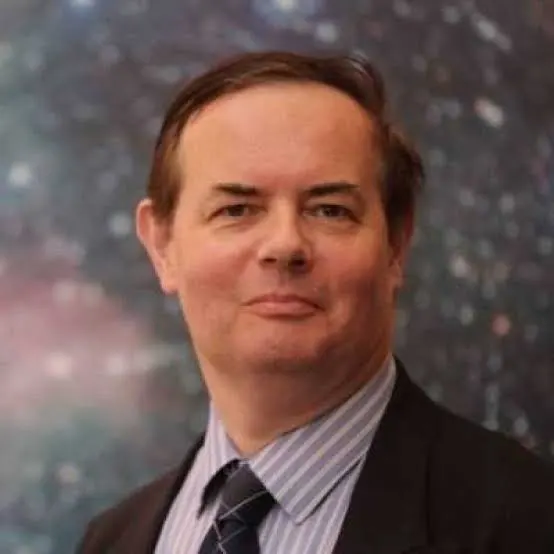
Prof. Bijaya K. Sahoo
Venue
K R Ramanathan Auditorium, PRL main Campus, Ahmedabad

Abstract

Atomic physics is one of the oldest and longest scientific endeavours in the history of mankind that spans from the time of offering ancient philosophical ideas to leading in the modern fundamental research today. It evolved from the idea of indivisible particles to explaining the concept of quantum mechanics and subatomic structures. Most of us are acquainted now with the notion of atomic structures, and with basic high-school-level scientific knowledge, one can explain electronic shell configurations within an atom. However, this knowledge is the tip of an iceberg in the real picture scenario of multi-electronic atomic structure description at the microscopic level. Taking literally the meaning of the famous saying ``two is too many", it is impossible to explain the structures of an atomic system with more than one electron exactly. Looking deeper into an atomic structure, it can be realised that it is not less mysterious than a mini universe that is filled with fundamental particles and interactions. To explore into this universe to uncover all known and unknown physics, both atomic experiments and theoretical studies need to work hand-in-hand. These studies involve the synergy between high-precision measurements and three different theoretical areas -- particle, nuclear and atomic physics. In this talk, I shall navigate you through this atomic universe to explore many interesting phenomena which can shed light into many new research avenues.

The physicist in the 21st Century: Applying fundamental knowledge to address global challenges.

Date
2024-01-05
Speaker

Prof. Nigel Mason
Venue
K R Ramanathan Auditorium, PRL main Campus, Ahmedabad

Abstract

Physics is one of the oldest academic disciplines, perhaps it is the oldest through its inclusion of astronomy and has often been called ‘the mother’ or ‘the king’ of sciences. Physics is often said to be the science that deals with the structure of matter and the interactions between the fundamental constituents of the observable universe. However, this makes it sound a rather abstract and theoretical discipline, whereas physics and physicists are addressing some of the greatest scientific and technological challenges facing humanity and the world today. Physics is integrated with all other sciences. For example, chemistry is rooted in atomic and molecular physics. Most branches of engineering are examples of applied physics. In architecture, physics is at the heart of determining structural stability, acoustics, heating, lighting, and cooling for buildings. Geology relies heavily on physics, including radioactive dating, earthquake analysis, and heat transfer across Earth’s surface. Physics is involved in medical diagnostics, such as X-rays and magnetic resonance imaging (MRI). Physics also has many applications in biology for example, physics describes how cells can protect themselves using their cell walls and cell membranes and also plays a key role in understanding the origins of life itself and whether there may be life elsewhere in the universe. While some disciplines, such as biophysics and geophysics, are hybrids of physics and other disciplines. In this talk, I will discuss the physicist of the 21st century and how he AND SHE will be at the forefront of the greatest scientific challenges and discoveries that await us, from climate change, clean energy, and cancer therapy to humanity’s exploration and habitation across our solar system. Physics is indeed the oldest science, but ‘The best is yet to come’.

Space Research Through Optical Window

Date
2023-03-22
Speaker
Prof. D. Pallamraju
Venue
K R Ramanathan Auditorium, PRL Main Campus, Ahmedabad

Abstract

Space has always fascinated humans. Especially, the sight of the stars, the galaxies, and the planets have kindled curiosity in the minds of many a scholars, thinkers as well as children since these objects can be seen with a naked eye. There is yet another light in the near earth region which an unaided eye cannot “see”, but understanding the variations in its brightness is important for fundamental investigations of the physics of sun-earth interactions as well as for several aspects of applications in our day-to-day life – as we are increasingly dependent on space-based technologies. Scientists have invented and developed innovative methods to remotely sense the behavior of the atmospheric regions ‘up above the sky’ using this light called the “airglow” or the “aurora” as the tracer of the medium. The behavior of these airglow or auroral emissions tell us about the weather at that altitudes in terms of the wave propagations, temperatures, winds, etc. These optical airglow emissions are present not only in the night but also in the daytime, just as do the stars, galaxies, and planets. PRL has pioneered the development of innovative techniques for the measurement of airglow in the daytime, akin to seeing the stars in the broad daylight, which have resulted in several new insights on the behavior of the near-earth space. This talk will attempt to give a flavor of the recent developments made in the measurement techniques and the discoveries made in the understanding of solar-terrestrial interactions. Some such optical techniques are being developed for space based research of not only the Earth’s upper atmosphere but also of the atmospheres of several other planets in forthcoming ISRO’s space missions. This is one of the frontier areas of research for the young physicists who are planning on taking up research as their career.

Challenges and limitations of detecting exoplanets

Date
2022-02-11
Speaker

Prof. Abhijit Chakraborty
Venue
Online

Abstract

Since the discovery of the first exoplanet 51 Peg b in 1995, the Geneva Observatory team led by Prof. Michele Mayor, today we know a zoo of exoplanets (~4000), and every of them is very different from the planets of our solar system, and they are also very different from each other in terms mass, density, temperature and distances from their host stars. This has thrown up a lot of challenges to the understanding of the formation of planets around stars and have completely out-seated the early 2000 era planet formation models. Even today, we are learning with the addition of every new discovery. However, planets are most difficult to detect around stars because of their faintness relative to the host star. For instance, Sun-Earth brightness contrast is 10 billion times, and Sun-Jupiter contrast is 1 billion times. Very few have been detected by direct imaging so far (in cases where the contrast level is of the order of a few to 10 million times only). A large number of detections have come from mainly two indirect methods a) The Radial Velocity method and b) The Transit Photometry method. The speaker will be talking about these two methods, the challenges in building such instruments, the limitations, and what prevents the detection of twin Earths at a distance of 1 AU from their host stars. Finally, this talk will also share Indian efforts (at PRL) towards discovering planets around stars and the future of detecting super-Earths (4 to 10 Earth-mass planets) in the habitable zone around stars.

Neutrinos: the invisible messengers

Date
2021-02-11
Speaker

Prof. Srubabati Goswami
Venue
Online

Abstract

Neutrinos are all around us, yet they remain elusive since they hardly interact with matter. This talk will discuss the various sources of neutrinos and the detection of the neutrinos in terrestrial detectors. These experiments have established that different kinds of neutrinos transform among each other on their way from the source to the detector. This is the phenomenon of neutrino oscillation, which requires neutrinos to be massive, compelling us to think beyond standard ideas of fundamental particles and their interactions.  This opens a new window towards a deeper understanding of nature.
Some future directions in this field, including the India-based Neutrino Observatory (INO) and the importance of neutrinos in multi-messenger astronomy, will also be discussed.

Water Resources of India: Challenges and Solutions

Date
2020-01-27
Speaker

Prof. R D Deshpande
Venue
K R Ramanathan Auditorium PRL Ahmedabad

Abstract

The contemporary hydrology is faced with great challenges of resolving known problems of water scarcity, anthropogenic pollution, geogenic contamination, dwindling surface flows, inequitable distribution and salinity ingression. The scientific processes underlying these hydrological problems are well understood and can be mitigated by appropriate field engineering measures, treatment technologies, improved water use efficiency and policy interventions. However, these problems have not been completely resolved yet. Beyond these known problems, that we are still grappling with, lies a mind-boggling ignorance about certain aspects of hydrological processes, their natural course and response to perturbing stimuli. In particular, the hydrological response to climate change, engineered interventions and anthropogenic perturbations are not well understood because of longer response time of natural hydrological systems. India is world’s largest user of groundwater, the 90% of which is used for agriculture. Agriculture, with its allied sectors, is the largest source of livelihoods in India. About 70 percent of its rural households depend primarily on agriculture for their livelihood. Agriculture sector also accounts for ~18% of total electricity consumption in India and contributes to ~15% of GDP. Thus, There is a complex relationship between water resources, social health and economy of India. Therefore, any undesirable change in hydrology of India needs to be monitored and prevented. Hydrological responses to natural and man-made changes are sluggish and silent. Therefore, adverse hydrological and ecological effects are often noticed only when it is too late and too difficult to recover. This ignorance about hydrological response poses greatest challenge for scientists, engineers, planners and policy makers, and defines the frontier of research. Modern humans have solved many difficult problems but water is more challenging, because it is not as simple as it seems. Some of the above aspects will be discussed in the talk.

Indian Planetary Missions

Date
2019-02-07
Speaker

Prof. Anil Bhardwaj
Venue
K R Ramanathan Auditorium PRL

Abstract

India embarked on the planetary exploration starting with the Chandrayaan-1 orbiter mission in 2008. This was followed by a mission to Mars, the Mars Orbiter Mission (MOM), launched in November 2013 and arrival on Mars in September 2014. The next Indian planetary mission is Chandrayaan-2, which, in addition to orbiter, will have a Lander and a Rover. India also has a planned mission to study Sun from the L1 vantage-point called Aditya-L1. This talk will briefly highlight the challenges and science of the Indian planetary missions.